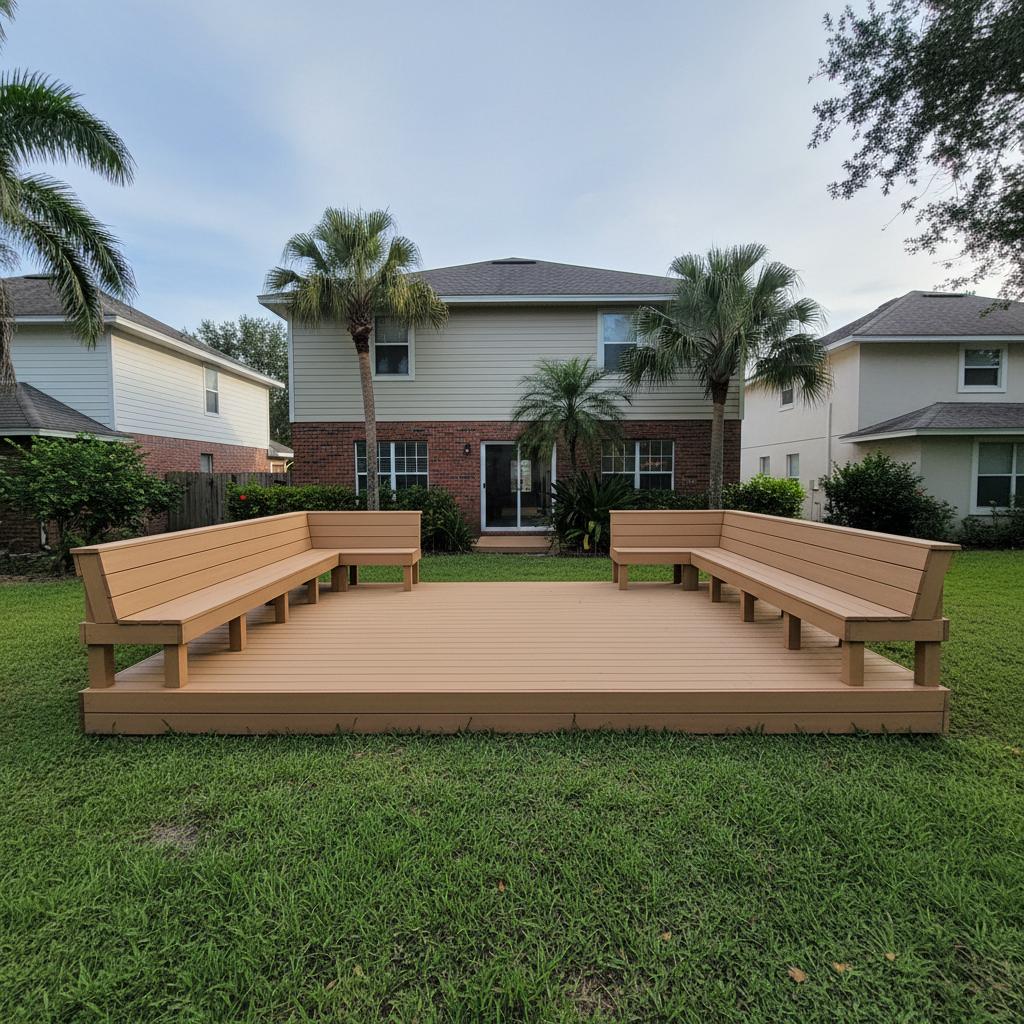
Bradenton has a lot of decks that look fine for two or three years and then start telling on the builder who put them up. The board might cup, the railing might get a wobble in it, or the ledger board pulls a hairline gap away from the house. None of that shows up on day one. It shows up after a summer of afternoon storms and a couple of hurricane seasons, which is exactly why picking the right builder matters more here than it would somewhere with mild weather and dry ground.
Start with the permit, not the price
Any deck attached to your house in Manatee County needs a building permit, and most freestanding decks over a certain height do too. A builder who tells you "we don't bother with permits on small jobs" is telling you they cut corners on inspections, and inspections are the only outside check that your footings, ledger attachment, and railing actually meet code. Ask who pulls the permit, whether it's in the company's name or yours, and what gets inspected along the way. On a typical deck that's usually a footing inspection before the concrete goes in and a final once the framing and railings are done. If a contractor waves this off, that's a walk-away sign, full stop.
A quick step you can take yourself: Manatee County's permit search is public. Before you sign anything, look up whether the company has pulled permits under its own name recently. If they've never pulled one, that tells you something.
Ask how they're handling the ground and the ledger
Most of Bradenton sits on sandy soil, which drains fast but doesn't hold a footing the way clay does. That means footing size and depth get decided by soil bearing capacity, not guesswork, and in some spots with a high water table you'll hit moisture a couple feet down even in the dry season. A builder who's done this a while will talk about footing diameter and depth like it's nothing, because it's the first calculation they make. If they can't tell you how deep the footings are going or why, they haven't thought about it.
The ledger board, where the deck bolts into your house, is the single most common failure point on attached decks nationwide, and it matters even more here because of how much rain we get from June through September. It needs flashing that actually sheds water away from the house framing, and it needs to be through-bolted or lag-bolted into solid framing, not just nailed. Ask specifically how they're flashing and fastening the ledger. If the answer is vague, that's a problem you won't see until the sheathing behind it starts rotting three years from now.
Materials that actually hold up on the Gulf Coast
Pressure-treated pine is still the most common decking material here and it's a fine choice, but only if the hardware matches it. Treated lumber today is made with chemicals that corrode plain galvanized fasteners faster than the old formulas did, so anything touching treated wood should be stainless steel or coated for ACQ-treated lumber specifically. Salt air along the coast and even a few miles inland speeds up any corrosion that's going to happen anyway. If a builder is using whatever screws were left over from the last job, ask.
Composite decking has gotten popular here for a good reason: it doesn't need staining or sealing, and Florida's humidity and UV exposure are hard on wood finishes. A stained deck in this climate often needs a fresh coat every 1 to 2 years, not the 3 to 4 you'd get further north, because the sun bakes the finish and afternoon storms wash it out. That's not a reason to avoid wood, it's just a maintenance cost you should know about before you pick the material, not after.
What separates a real quote from a guess
A written estimate should break down lumber or composite material, fasteners and hardware, footings, labor, and permit fees as separate line items. If someone hands you a single number on a napkin, you have no way to know what you're actually paying for or where they'll cut costs if the job runs long. Ask for the footing spacing and joist spacing they're planning, typically 16 inches on center for joists under standard decking, sometimes tighter under composite because it needs more support between boards. A contractor who knows these numbers off the top of their head has built more than a couple of decks.
Also ask about wind rating. Bradenton falls in a hurricane-exposed wind zone, and railings and post connections need hardware rated for that, not just whatever's cheapest at the box store. A deck railing that passes code here has to resist a real lateral load, not just look sturdy when you lean on it.
Red flags worth walking away from
- No physical address or local license number they'll give you in writing.
- Asking for full payment up front before any material is delivered.
- No mention of permits, inspections, or wind load anywhere in the conversation.
- A quote with no breakdown, just a lump sum.
- Reluctance to tell you the brand or grade of lumber, hardware, or composite they're planning to use.
None of these by themselves means a company is dishonest, but two or three together is a pattern.
Older neighborhoods versus newer subdivisions
A deck job on a 1970s house near Palma Sola or in one of the older streets off Manatee Avenue is a different job than one on a house built in the last ten years out toward Lakewood Ranch. Older homes often have framing that's settled or slightly out of level, existing footings from a prior deck that need to come out, and sometimes older electrical or plumbing running near where new post holes need to go. Newer subdivisions are more likely to have HOA rules about deck materials, railing style, and even stain color, so factor in an extra step of HOA approval before permitting starts if you're in one of those communities. A builder who's worked both types of neighborhoods around Bradenton will ask about this before you have to bring it up.
If you're weighing quotes right now, ask each builder the same five or six questions above and see who answers without hesitating. That's usually a better filter than the price on the page. We go through all of this with every homeout who calls about a new deck, a repair, or just getting an old one back into shape, and you can see the kind of work we do at Apex Deck Solutions.